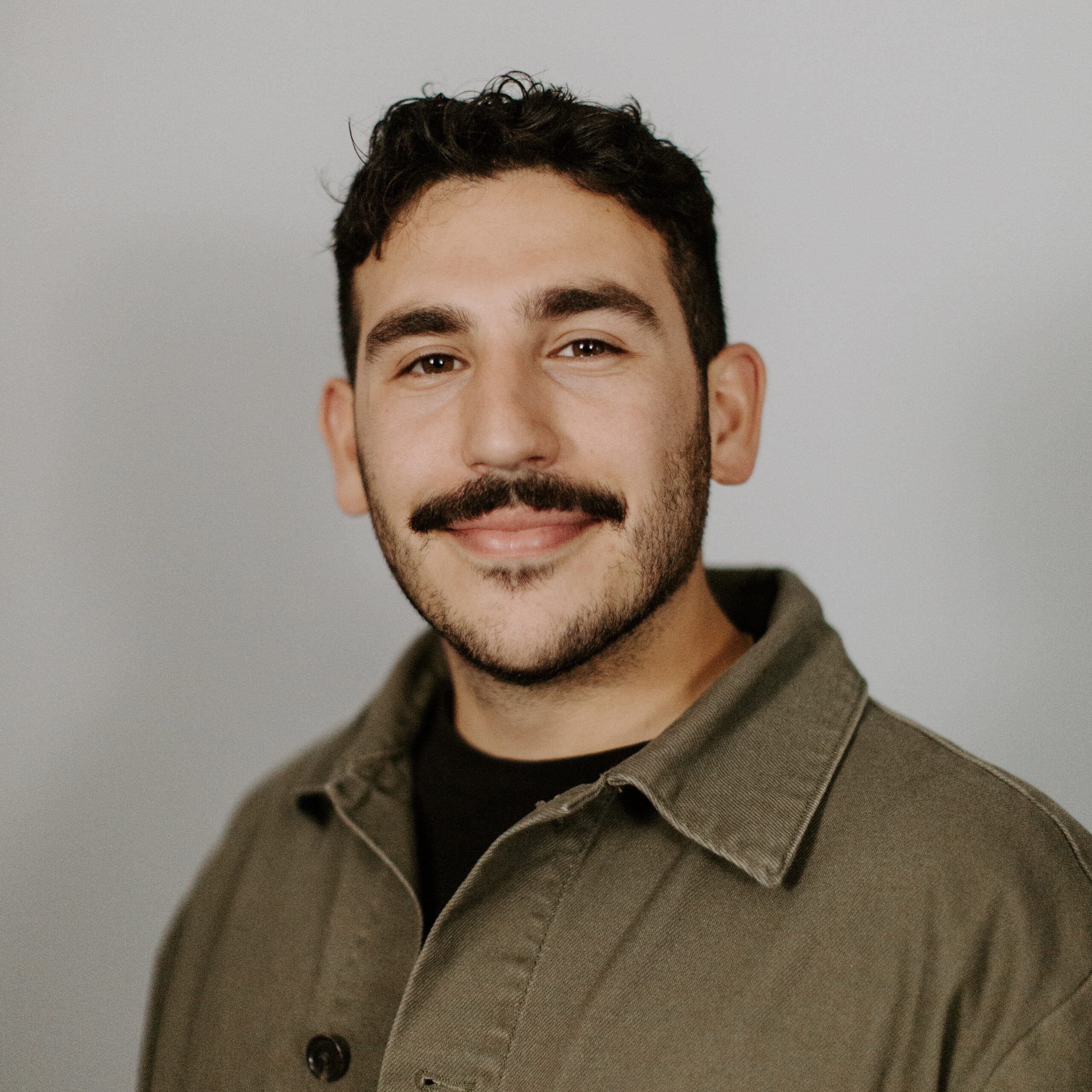
It is not unreasonable to wonder about El-Sayed’s connection with a terrorist organization based on his familial ties
“Get religion out of politics!” That’s what they say. But there’s a problem. How can I—not only as a Christian or a pastor, but a normal thinking person—evaluate some political issues without a theological lens?
And why shouldn’t I? I have the freedom of religion and the freedom of speech, so why is it that the secular-atheist worldview gets to occupy the public square, but the religious worldview is swept under the rug or tossed into the closet?
Couldn’t I just as easily ask the reverse and insist that the government get politics out of religion? That is exactly what Thomas Jefferson assured the Danbury Baptists about when he promised to build “a wall of separation between Church and State.” If you haven’t, you should read it in context. Jefferson’s intent was to protect the church from the overreach of government, not the public square from the influence of faith.
The political debates of our day have everything to do with God—anthropology (design, sexuality, identity, family), hamartiology (sin and its consequences), and ecclesiology (the church and the extent of her authority). These are unbelievably important issues that God addresses in His word. The Bible teaches me that life is to be protected, so I oppose abortion (Ex. 21:22–25; Pr. 24:11–12). The Bible teaches me that wicked deeds like murder is to be punished, so I support the death penalty (Gn. 9:6; Rm. 13:4). The Bible teaches me that there are spheres of authority (Mt. 22:21), so I support the separation of church and state (in its original intent).
The catchphrase “get religion out of politics” is cute and pithy, but I am not convinced of its appropriateness for the public square, or ability to be enforced, or effectiveness in establishing a moral order.
I appreciate D. Michael Clary’s observation: “As an increasing number of moral issues have been deemed ‘political,’ the pastors who address them with clarity and conviction will be accused of preaching politics. But the pastor who avoids these issues for the sake of unity will leave his people ill-equipped regarding some of the most urgent issues of our day. And if a pastor won’t speak up because he’s afraid of being political, Satan will politicize everything until he won’t speak at all.”
Furthermore, as a pastor, I am responsible to shepherd the lives of hundreds of families in my city (Acts 20:26-28; 2 Tim. 4:2-4). This includes political issues.
For example, I’m interested in recalling my county’s prosecutor because I do not believe she is serving the public justly, which has resulted in undeserved plea deals and an unwillingness to punish the evildoers. I’m interested in who serves on local school boards because the Michigan Board of Education have implemented unbiblical sex education standards but have delegated each school district to decide whether they will embrace the standards or not. I’m interested in who serves on local planning commissions because they can deny a Christian ministry their constitutional right to assemble in a space they own.
Politics matter and anyone who says otherwise is likely benefiting from your disengagement.
When a pastor is accused of being political, I wonder if the chafe is actually that a pastor is being conservative. Call me whatever you want. I am far more interested in being biblical.
One of the ways that I want to apply godly wisdom to my life is through political involvement and voting. God ordains earthly rulers (Rm. 13:1; Pr. 21:1)—whether that is a deputy sheriff, a state senator, or a king. In our country, we have the responsibility to elect officials to serve in the executive and legislative branches of government (Deut. 1:13; Pr. 29:2).
To vote Christianly is (1) to be honestly informed about what a candidate believes (investigate past their policy page and campaign slogans; listen to debates where they are challenged to defend their position; if possible, read articles or publications), (2) to weigh those beliefs against the promotions and prohibitions of Scripture, and (3) to not violate your conscience (for a helpful book on this topic, I recommend Conscience: What It Is, How to Train It, and Loving Those Who Differ by Andy Naselli and J.D. Crowley).
With that said, I live in Michigan. We have a hotly contested Senate race right now, between Mike Rogers and Abdul Mohammed El-Sayed. So, I want to share eight reasons why I, as a Christian pastor, cannot vote for Abdul El-Sayed (D-MI) to be the next U.S. Senator for the State of Michigan.
1: He Supports Abortion.
El-Sayed said, “As a doctor and former public health official, I believe deeply that decisions about your body and your health belong to you—not politicians. Together, we’ll fight to protect abortion rights, preserve access to contraception and IVF, and defend the reproductive freedom of every Michigander.” I oppose this. No matter what kind of euphemism you use (e.g., reproductive freedom, healthcare), the Bible teaches that the preborn human is a unique and valuable person that deserves legal protection. The Greek word brephos is used for preborn John (Luke 1:41, 44), newborn Jesus (Luke 2:12, 16), infants brought to Jesus (Luke 18:15–17), the babies killed by Pharaoh (Acts 7:19), newborn infants (1 Peter 2:2), and childhood (2 Timothy 3:15). The word is used for babies in a wide range of development—beginning in the fetal stage until toddler stage. This little word study for brephos reveals that the biblical authors did not discriminate between born and preborn humans. Regardless of size, level of development, environment, or degree of dependency, Luke, Paul, and Peter rightly understood that humans are made in the image of God. If someone acknowledges that the preborn child is more than a “clump of cells” and that he or she is a human being made in the image of God, possessing real dignity and worth—then it should at least be understandable why Christians are deeply and morally opposed to abortion. Our conviction comes from a sincere commitment to protect a human life that Scripture identifies as precious. I wrote a lengthy essay called Not Yet Born: A Biblical Defense for Preborn Humans.
2: He Supports “Sex-Change” Surgeries on Minors.
It has been well documented that El-Sayed is aligned with his Democrat colleagues on LGBTQ+ healthcare, including transition surgeries and puberty blockers for minors. I oppose this. To affirm one’s gender should mean that I am affirming the goodness of one’s objective biological gender as God wisely designed them. But instead, so-called “gender affirming care” is denying a person’s God-given gender and attempting to replace it with the opposite gender. I believe God has sovereignly chosen each person as a male or female (Gn. 1:27; Ps. 139:14; 1 Cor. 6:19-20). This can be clearly evidenced through one’s genetic makeup, physical appearance, and (for the most part) general personalities.
3: He Does Not Support Law Enforcement.
El-Sayed has flip-flopped on this issue (like many other progressives have). CNN reported that “interviews from 2020 and 2021 show him embracing the “defund the police” movement—not just uttering the phrase but supporting the key principle of reinvesting funds from the police into other public-sector spaces such as mental health and anti-poverty efforts.” Now, I am not as opposed to funding mental health support, but the rhetoric for the defund movement is much more sympathetic to unlawful and disorderly conduct. This can be demonstrated in his vitriol against Immigration and Customs Enforcement (ICE). In a press release from January 2026, El-Sayed clearly says, “ICE is irredeemable. Retraining won’t fix it. And the only reason to deny this is political cowardice.” I do not agree with El-Sayed on his law enforcement policy. As long as we have citizens in our nation and illegal immigrants who cross our border, a wise and just government will have law enforcement officers to… enforce the law. It should be said that the Christian does have a responsibility to care for the sojourner (Lev. 19:33-34; Mt. 25:35). Yes, and amen. However, I believe that the biblical term “sojourner” is more appropriately applied to “legal immigrant” (which my maternal grandparents were when they moved from Syria in the 1960s) not “illegal immigrant” which the Biden administration welcomed 14 million of them. Regarding law enforcement in general, I do not believe it is the individual citizen’s right to execute justice however they please. That would violate God’s possession of vengeance. Romans 13:1-4 teaches that God has delegated some of that vengeance to the state to “punish evil and protect good.” Therefore, I am not in favor of defunding the police or abolishing ICE.
4: He is Absurdly Anti-Israel and Anti-Semitic.
El-Sayed has expressed strong criticism regarding U.S. alliance with Israel. I think it is completely reasonable for a politician to have diverse opinion on foreign policy. And I even think that many evangelical Christians can have the tendency to be a bit too territorial over Israel. However, El-Sayed has gone too far. After a targeted attack against Jews in a synagogue in West Bloomfield, El-Sayed quipped, “hurt people hurt people,” which he has since taken back (surprise surprise). This has resulted in a coalition of Michigan Jews presenting five non-negotiables for political candidates. One demand is to support “Jewish sovereignty in Israel” which is problematic for El-Sayed because he has previously commented: “I don’t believe in ethno-states.” Well, this is a clever non-answer that tells those who support Israel all they need to know. Personally, I believe that the modern nation of Israel is our greatest ally in the Middle East against the impeding threat of Mohammedans, jihadists, and Islamic caliphates.
5: He Signals Support for Socialist Economic Systems.
In a recent debate, El-Sayed said, “We need to actually start standing up to monopolies and oligopolies and start regulating them, so we can get back to a system where there is competitiveness in a market…” I completely agree. I support a competitive free market and would love to see more and better small business throughout Michigan. I believe that capitalism is the best economic system we have seen so far. And apparently, El-Sayed is a capitalist now; however, I am not convinced that he isn’t trying to rebrand himself and distance himself from the far-left. One of the reasons I doubt that is because a pillar of his campaign has been “Medicare for All” which reeks with communism. Should we reform the healthcare? Sure. But I do not believe that El-Sayed’s idea for universal healthcare will be effective or beneficial. But this is about economics. The Bible does not support socialism or communism. The government forcefully taking your money to give to others is not the same thing as you freely giving your money. The difference between state-led redistribution of wealth and the Acts 2 model of supportive care is the difference between “voluntary” and “mandatory.” We need to distinguish between taxation and redistribution. Romans 13:6-7 says to pay “taxes to whom taxes are owed.” Citizens should pay taxes for the common good, like public servants, public property, and even some welfare and public education. Those are provisions inside a system that still recognizes private property. Redistribution is different. It’s the Marxist process of taking assets (private property, means of production, and wealth) from those with and redistributing them to those without, so that no one actually has private property or personal wealth. Scripture speaks against this because property is legitimately owned. “You shall not steal” and “you shall not covet” both assume the validity of possession. And giving is voluntary: Acts 5:4 (“was it not at your disposal?”) and 2 Corinthians 9:7 (“not reluctantly or under compulsion”). It is a beautiful and Christian thing to freely and generously give, especially to those in need. But that is not a biblical argument for socialism or communism.
The last three concerns I have with El-Sayed is the company he has kept (Ps. 1:1; Pr. 13:20; 1 Cor. 15:33). He has a history with Hasan Piker, the DSA, and the Muslim Brotherhood. Only recently has he attempted to distance himself from them. That bothers me. I do not see any substantive difference between them. There is a coalition being formed between Muslims and Marxists (also called the Red-Green Alliance) and El-Sayed seems to be one of the pawns. I have yet to be convinced to the contrary.
6: His Relationship with Hasan Piker.
Hasan Piker is a far-left influencer. While most politicians and pundits speak in euphemisms and covert language, Piker is explicit. He has a litany of commentary in support of terrorist groups and violence which can be read here. One problematic comment was that America deserved 9/11. Abdul El-Sayed buddied up with Hasan Piker throughout the beginning of his campaign. They spoke at Michigan State and University of Michigan together. But I suspect that after some momentum was built, eventually the backlash outweighed the bump, and El-Sayed determined that it was no longer politically advantageous for the two to be linked. El-Sayed began to distance himself from Piker.
7: His Ties with the Democratic Socialists of America.
Similarly, El-Sayed continues to distance himself from the Democratic Socialists of America (DSA), despite being allied with many of the big-hitters. Even worse, Fox News reports that between 2017 and 2020, “El-Sayed attended and spoke at six events held by the DSA, including a 2019 fundraiser which he headlined.” The DSA writes about their own goals: “We want to win “radical” reforms like single-payer Medicare for All, defunding the police/refunding communities, the Green New Deal, and more as a transition to a freer, more just life.” This is lined up with El-Sayed’s vision for Michigan. Despite his continued dodging and denying, I believe El-Sayed’s history with the DSA is enough to warrant serious concerns over his position on Socialism, Communism, and Marxism. I’ve written more about the history and threat of these isms. I am seriously concerned that El-Sayed has been pandering to the middle of the Democratic Party with appeals of his newfound “capitalism,” luring moderates and liberals in. Once elected, I anticipate Abdul would be far more openly socialistic in how he legislates and governs. This play was run in New York City with Mayor Zohran Mamdani. He pandered to the middle, then immediately (literally in his inaugural speech) promised to “replace the frigidity of rugged individualism with the warmth of collectivism.” He had the audacity to say, “We will govern without shame and insecurity, making no apology for what we believe, I was elected as a Democratic Socialist and I will govern as a Democratic Socialist. I will not abandon my principles for fear of being deemed radical.” Mamdani was supported by the same cast who is supporting El-Sayed. Everyone from Bernie to AOC to Obama to Hasan.
8: His Ties to the Muslim Brotherhood.
And again, like Piker or the DSA, El-Sayed is trying to distance himself from this group. When asked directly if he would disavow the Muslim Brotherhood, he deflected into some sort of petty victim game. Rebutting with the question: “Why would you assume I wouldn’t?” This was an obvious obfuscation and attempts to reframe the question that positions himself as the victim and the question as an absurdity. But it is not unreasonable at all to ask or assume this because the evidence suggests he is connected to them and he has yet to demonstrate, without being repeatedly pressured, that he disavows them. Most recently, in a debate with his opponent Mike Rogers (R-MI), he expresses disappointment and frustration when pressed: “He [Rogers] keeps raising this question about this association with an organization [the Muslim Brotherhood] I’ve never been a part of… because my mom who is a nurse in Missouri? It doesn’t make any sense and it’s actually really quite beneath you, Mike.” Do you see what he’s doing? He is reframing the accusation and portraying his mother to be a sweet, compassionate nurse from Middle-America. A classic manipulation tactic is to not overtly lie but subtlety withhold truth—first employed by the Serpent and taught to his offspring (Gn. 3:15). The New York Post reported: “Fatten Elkomy, 66, a psychiatric nurse at New Horizons Community Support Services in Columbia, MO, was born in Alexandria, Egypt, and previously worked for the Islamic American Relief Agency—a designated terrorist organization—according to 2010 federal court documents naming her. While in Egypt in the 1970s, she was an activist with the Muslim Brotherhood—a terror-designated Islamist political movement seeking to establish sharia rule in Muslim-majority countries.” It is not unreasonable at all to wonder about El-Sayed’s connection with a terrorist organization based on his familial ties.
Conclusion
For these 8 reasons, I am not voting for Abdul El-Sayed. Because he will support the things God opposes. El-Sayed will protect and propel the distortion of marriage, the confusion of gender, the eradication of the unborn, the mutilation of children, and the Islamification of our nation. Not only will I not vote for him, but I warn Christians against voting for anyone who will gladly support the things God opposes.
With all of that being said, if Abdul El-Sayed wins his race and becomes our next Michigan Senator, then I will pray for him (like I have for all sorts of leaders) in obedience to 1 Timothy 2:1-2, “First of all, then, I urge that supplications, prayers, intercessions, and thanksgivings be made for all people, for kings and all who are in high positions, that we may lead a peaceful and quiet life, godly and dignified in every way.” But I pray God gives us righteous leaders who will govern righteously.
Francis Schaeffer, an American pastor, wisely wrote in A Christian Manifesto, “Most fundamentally, our culture, society, government, and law are in the condition they are in, not because of a conspiracy, but because the church has forsaken its duty to be the salt of the culture. It is the church’s duty (as well as its privilege) to do now what it should have been doing all the time—to use the freedom we do have to be that salt of the culture.”
I refuse to forsake my duty to be salt and light in our country. And I plan to fulfill this duty next week by casting an effective vote against El-Sayed, for the glory of God and the good of Michigan.
Share This Story