
We cleared Ground Zero, but the spirit of old America still lies in that pit. Remember it, and rebuild.
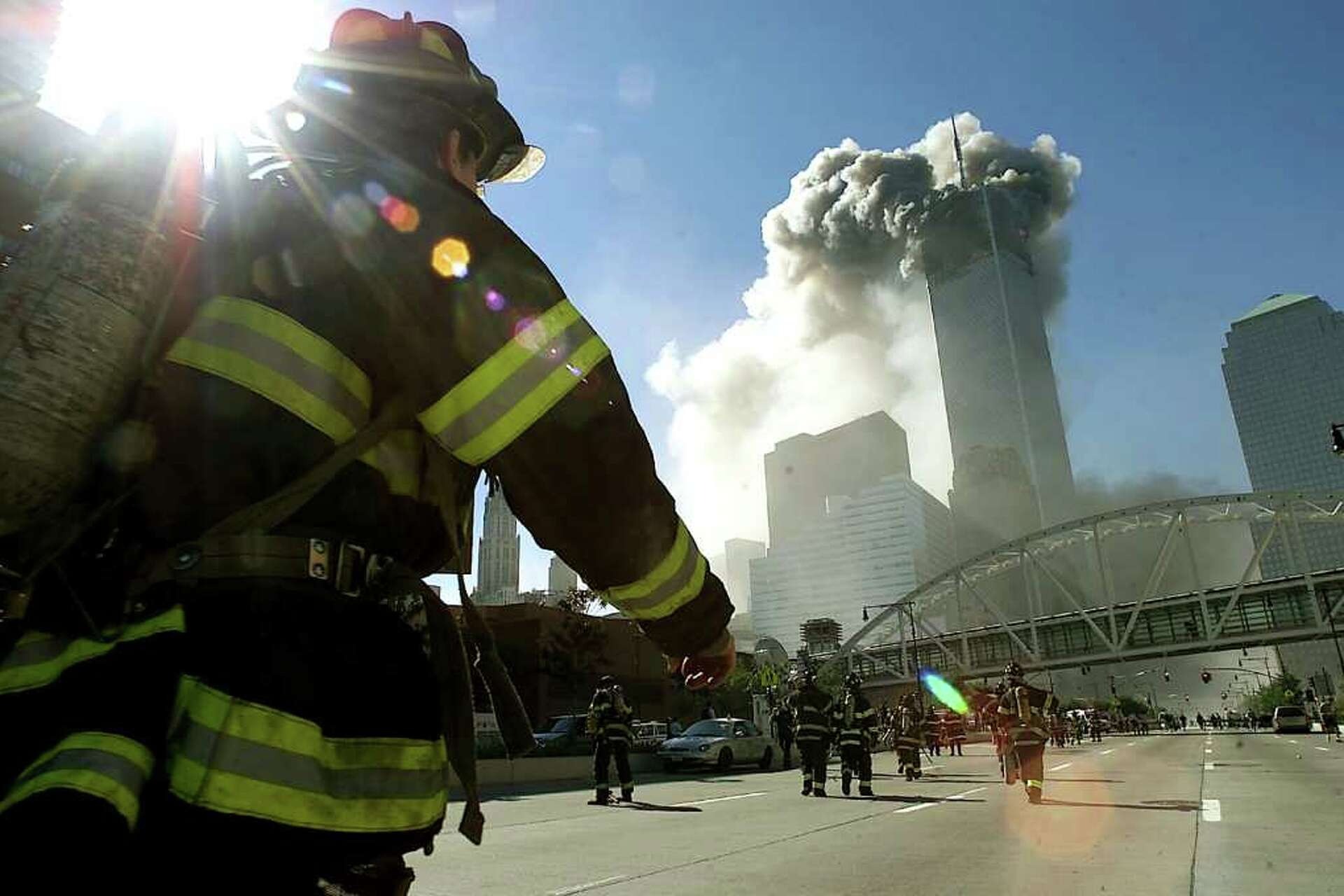
The September 11, 2001 attack on Lower Manhattan came in four violent blows, each one concussing the chest.
8:46. North Tower hit. Beat.
9:03. South Tower hit. Beat.
9:59. South Tower falls. Beat.
10:28. North Tower falls. Beat.
Seventeen minutes of confusion clear in a flash as the second plane strikes. We are under attack. The terror builds with each blow, and before we can grasp one horror, the next is upon us. The second tower struck is the first to fall. The North Tower is the beginning and end of the nightmare. Perhaps this twisted symmetry is why that day still grips us.
In A Grief Observed, C.S. Lewis describes grief as a valley where each bend might reveal a new country. But some bends may turn you round, and one may sometimes “wonder whether the valley isn’t a circular trench.”
Every September, I circle the same bend.
I wasn’t in New York that day, so I always assumed my fixation would ease with age. It never has. I have never forgotten. 25 years later, I still look at the images of the burning towers with the same sadness.
In them, I see the heroism of New York’s Finest — the thousands of first responders who, without hesitation, ran to the smoking maw of Ground Zero and gave their bodies to save their countrymen. Countless heroes were forged that day, among them United 93’s Todd Beamer.
“Are you guys ready? Okay. Let’s roll.”
The final words of a man whose courage echoed over the airwaves nationwide. In our immediate response, I see the best of who we are, who we were, as Americans.
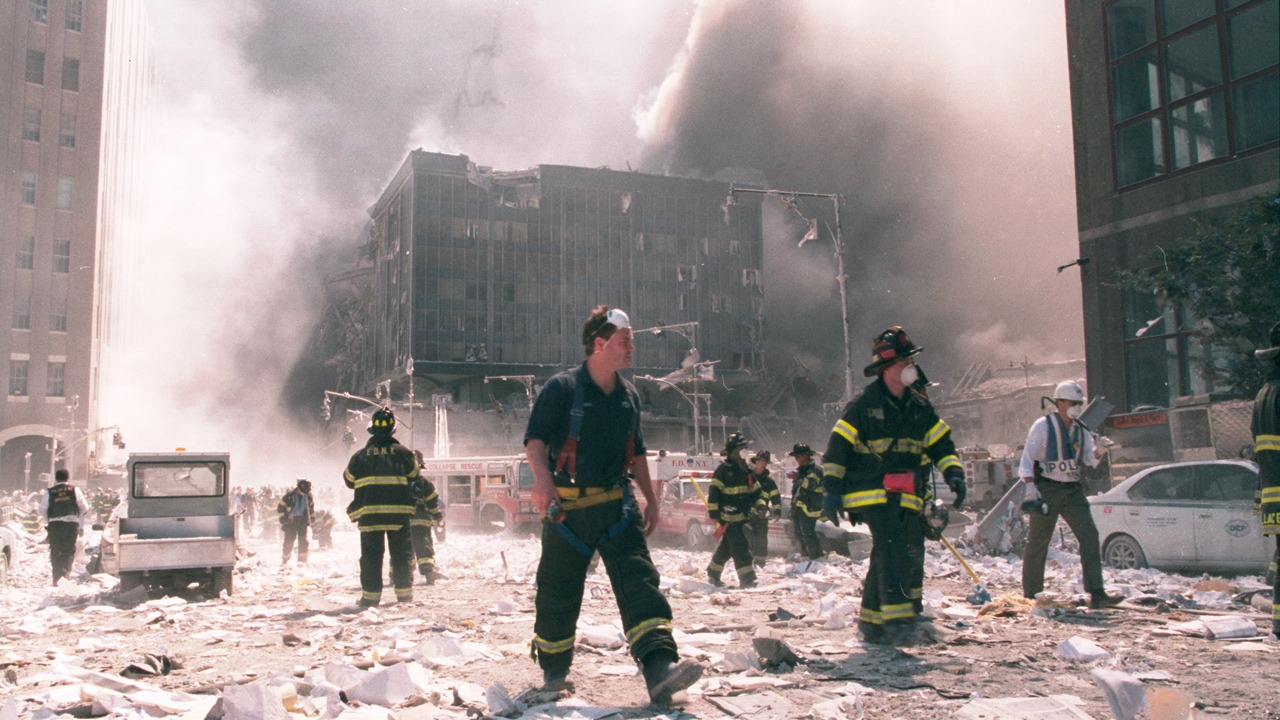
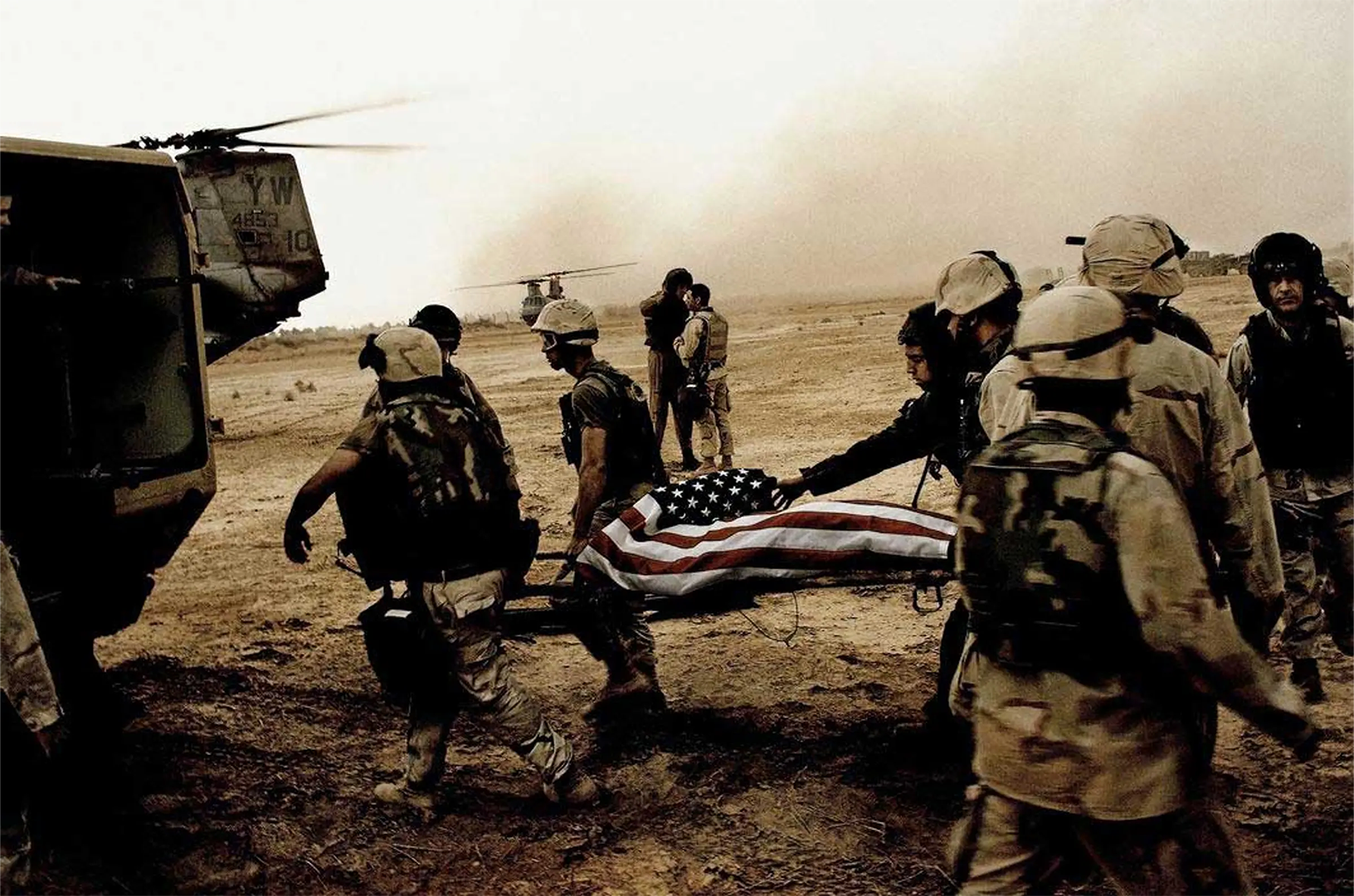
But I also see the seed of the Global War on Terror sprout. A war that would scar the nation afresh. I see my own father leaving for Mosul. Two years cleaved from his family, just as I was becoming a man. I see the financial crisis, an unpayable debt, the end of Pax Americana. I see thirteen dead Americans at the Abbey Gate of Hamid Karzai Airport, the bloody bookend to twenty years of war.
These are the threads of grief that stitch together my own life, and each runs through my countrymen’s lives as well. Every man has his own collection of memories flashing through his mind. Millions of stories, all called up in a moment when we look at those two burning towers. 25 years later, we look back on these events with weathered eyes and ask: What was it all for?
As I sat with these feelings once again today, I found both comfort and a challenge in C.S. Lewis’ well-worn classic, A Grief Observed. Here are three thoughts for Americans as we remember our fallen today.
I. We fled from our grief, so we have never healed
“No one ever told me that grief felt so like fear. I am not afraid, but the sensation is like being afraid. The same fluttering in the stomach, the same restlessness, the yawning. I keep on swallowing.” —C.S. Lewis, A Grief Observed
After 9/11, we fled from our grief. We did so in fear. Fear that what was broken might not be salvaged. Millions whispered the same question: “What if the country never recovers?”
Motion has a way of easing the suffering of the afflicted. Hoping that vengeance would salve our wounds, we ran headlong into two brutal wars. Not that striking the Taliban was unjustified — they sheltered the men who killed our people. Nor was hunting Osama bin Laden wrong — blood calls out for blood.
We knew “exporting democracy” was fruitless, yet we still sent our sons into the desert to build nations in our image. Our leaders knew Islam was no religion of peace, even if they said otherwise. But that wasn’t really the point. The point was to do something, anything, that might bring order to the chaos. Like the man who loses his family and buries himself in his workshop, we busied ourselves with these global projects to the neglect of our homeland. As if the redemption of our enemies might prove that it was all worth it in the end.
Yet we were less the tinkerer than the violent drunkard. We stumbled around the world, swinging at whatever came within reach. Our best men answered the call and were blown apart by roadside bombs in some sandy ditch. We answered in rage and sent more. On it went for twenty years until one August night, it ended.
Our failure only fed the fear that we were broken beyond repair.
Whatever unity we found in the year of calamity soon faded. The week after the attacks, nearly half of the country went to church. By November, attendance was back to normal. Our media grew shallow and cynical. More than ever, we produced art that provoked and divided. Beneath it all, our faith in God had shattered with the towers.
From the pit of Ground Zero rose the beast of New Atheism. Sam Harris began writing The End of Faith on September 12, 2001, setting off a new wave of attacks on the American Christian tradition. Within six years, Dawkins, Hitchens, and Dennett had joined him—they took the name “The Four Horsemen.”
Fleeing our grief only worsened our condition. When we numbed our sorrow, we dulled our instinct to love good and hate evil. As Lewis warned in The Abolition of Man, “we make men without chests and expect of them virtue and enterprise.”
II. We must grieve rightly, or we will fail to honor the dead
“I seem to remember–though I couldn’t quote one at the moment–all sorts of ballads and folk-tales in which the dead tell us that our mourning does them some kind of wrong. They beg us to stop it. There may be far more depth in this than I thought.” —C.S. Lewis, A Grief Observed
The poet often speaks of living for those who cannot live for themselves; that in running a good race we might honor those whose cord was cut early. But man cannot hope to live well in the present if his mind is stuck replaying the past. No, a mind haunted by memories is of little use. Yet, we must always remember—rather, we can Never Forget. And so the dance goes, until the dead become a part of us, the call of the mourning dove that bids us rise at dawn. As Rudyard Kipling wrote: “Lord God of Hosts, be with us yet,/Lest we forget—lest we forget!”
Kipling warns us that forgetting God is the surest path to sorrow. If one remembers Him rightly, he can’t help but rise to action. Yet, many among us have made peace with losing on earth. “Maranatha! Jesus, come, save us from the mess we’ve made for ourselves,” they wail to the heavens.
But what if He doesn’t? Not yet, at least. What if our Lord tarries, choosing to return in another thousand years? How then, Christian man, will you treat the nation where the Lord placed you? In his 1861 sermon “Accidents, Not Punishments,” Charles Spurgeon addresses his own “year of calamities”:
“Now, men and brethren, such things as these have always happened in all ages of the world. Think not that this is a new thing; do not dream, as some do, that this is the produce of an overwrought civilization…”
Calamity is not the end of all things, though there is a comfort in believing that it is. Flee from that comfort—it is poison.
Consider Gregory the Great, perched over the ruins of Rome. Plague had swept the city, the Lombards had besieged it, and the great Pax Romana had long ended. Gregory believed he was seeing the end of days. Even so, he sent monks to England to convert the pagans. He acted as if the world would continue on, and indeed it did. From the ashes of Rome rose Christendom.
Men die, and it is never less painful. There is no help in reading entrails, looking for a prophetic escape from our pain. No, we need men to clear the rubble and rebuild, not men frozen by fear.
III. We must find our courage again, for there is yet good work to be done
“If a mother is mourning not for what she has lost but for what her dead child has lost, it is a comfort to believe that the child has not lost the end for which it was created. And it is a comfort to believe that she herself, in losing her chief or only natural happiness, has not lost a greater thing, that she may still hope to ‘glorify God and enjoy Him forever’.” —C.S. Lewis, A Grief Observed
Lewis wondered whether his valley of grief was a circular trench. “But it isn’t,” he wrote. The bends may be familiar, but the road goes on.
The amputee will never get his leg back; it is gone. So he fixes one of steel to his body, and he walks. Perhaps he even runs. Now and then a twinge of phantom pain reminds him that he was once whole. Yet, he has learned to live again. The America that existed before September 11 is gone, but we are by no means without hope.
Nehemiah, too, grieved a ruin. When the king asked what troubled him, he answered that the city of his fathers was rubble, “and its gates have been destroyed by fire.” Yet he went and built. Trowel in one hand, sword in the other, each family raised the wall before its own hearth. Isn’t this the quality of courage? To cast off doubts and fears, choosing instead to do the next right thing? I fear that the sun is setting on America, but so long as she has men to preserve her, she may yet have a chance. We are bound by duty to try; there is no honor for the dead if no American men are left to honor them.
So, we are left with but one task: live for Christ and defend Him courageously. Death will take care of itself, so what are we waiting for? The slow descent of a coward, dying a thousand times over before crossing the veil? What end does a life like that serve? In his book Loser Theology: Why the Weak Will Not Inherit the Earth, Michael Clary condemns the “theological permission slip” that draws us to “accept defeat rather than do the painful work of resistance.” We cannot abide a loser, nor can we be sated with talk of remembrance while our country dies in the gutter. There is no honor there.
Instead, we must relish the call, as Spurgeon put it, to blow the “blast of the Gospel trumpet in the ears of deaf and perishing souls!” To speak the truth with conviction. As Paul says in Ephesians 4:25, “let each one of you speak the truth with his neighbor.”
Pastors, your church is looking for conviction. Preach boldly every day, cutting a righteous path that others can follow. In doing so, you have exercised your own measure of courage. You may lose some congregants along the way, but those who stay will be men of the right mettle. Better yet, you will have gained the truth.
Grief is a bitter pill. America has bled, and she won’t soon forget it, but we owe the dead more than just our tears. Ground Zero has been cleared, but the spirit of old America still lies somewhere in that pit. We must remember who we were, and build it again.
Share This Story
